×
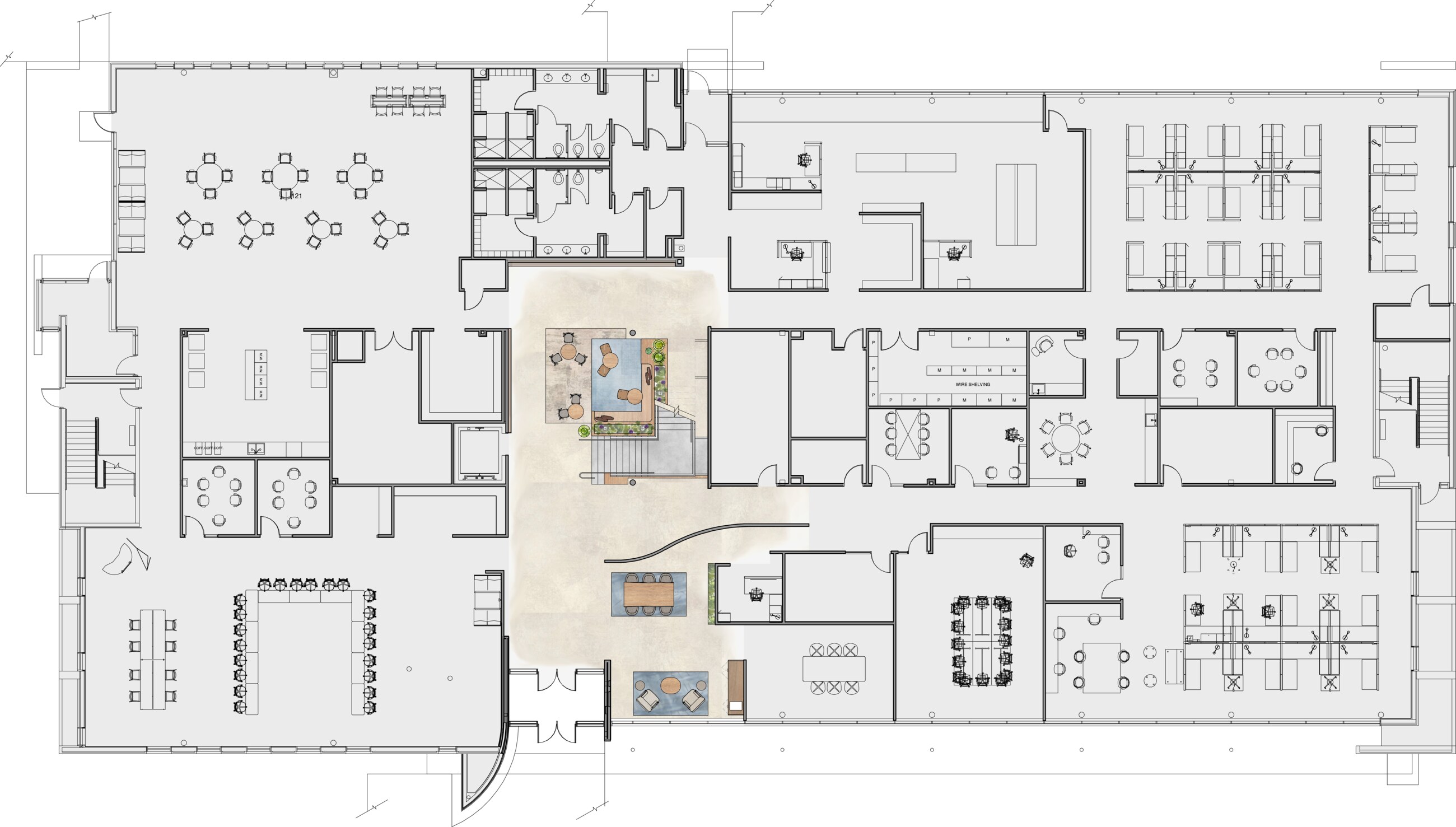
This concept represents an early-stage design exploration intended to communicate spatial ideas, not finalized finishes or specifications. The sketch-based renderings are used intentionally to keep the focus on experience, atmosphere, and spatial relationships rather than material resolution at this stage.
As fellow designers, we believe there is value in maintaining a degree of openness in the work — allowing ideas to evolve collaboratively with the client and project stakeholders. This approach supports a more iterative and shared design process.
Given the potential for this workplace strategy to scale across multiple locations, the intent is to establish a clear and unified design language while allowing each site to adapt and express its own character within a consistent framework.
Highlighting the people, projects, and stories that shape Mead & Hunt
Activating shared space to foster interaction, collaboration and wellbeing
Creating a hospitality driven arrival experience that reflects Mead & Hunt's identity
Digital check-in is seamlessly integrated into the arrival sequence, supporting security and efficiency without disrupting the spatial experience. Additional digital displays may extend its function beyond entry, supporting wayfinding, meeting touchpoints, and real-time engagement.
The brand moment is embedded within the architecture and expressed through materiality, lighting, and spatial composition rather than applied graphics alone. It becomes an opportunity for employees to actively participate in shaping identity — through collaborative elements like a mural or other creative contributions — making culture visible, shared, and evolving.
The arrival experience is designed as a destination, not just a point of entry. Beyond check-in, the lobby becomes a daily touchpoint for employees and visitors alike, offering amenities such as coffee, hydration, and light refreshments. This transforms the space into an active hub for pause, gathering, and informal exchange.
The space is designed to encourage informal interaction and opportunities for spontaneous connection. It supports both planned and unplanned exchange, reinforcing a culture of collaboration within everyday moments.
Natural elements are integrated throughout the space to soften the built environment and enhance overall wellbeing. Plantings, material warmth, and visual connections to nature create a grounding presence that balances activity with calm.
Intentional moments of pause are embedded within the spatial sequence, offering areas for rest, reflection, or informal conversation. Comfortable seating and a grounded material palette create a sense of ease within the workplace, supporting restoration throughout the day.
The space serves as a platform for communicating the people, processes, and purpose behind the work. It brings visibility to the culture of the organization through curated narratives that connect teams across disciplines.
A flexible setting for presenting active and completed work, allowing teams to share progress, outcomes, and innovation. The space supports both formal and informal moments of review, reflection, and recognition.
We translated brand energy into spatial behavior, with selective moments of color emergence that feel intentional rather than decorative. The palette is grounded in a quiet material restraint, layering deep neutrals, natural woods, and tactile textiles, while allowing key brand tones to surface as wayfinding and focal moments.
A largely neutral base ensures flexibility across different offices and locations, enabling each environment to introduce subtle local character without disrupting the overarching system.
The result is a calibrated balance between warmth and structure: hospitality driven surfaces that soften the architecture, paired with sharper graphic contrasts that guide movement and reinforce identity.
Layered neutrals and soft textures prioritize comfort and encourage longer stays while maintaining a refined, understated palette.
Area rugs act as spatial signals and grounding devices, introducing Mead and Hunt's primary brand color as a navigational and experiential layer at floor level.
Wood tones establish a hospitality forward foundation, bringing warmth and tactility while balancing cooler elements.
Biophilia is integrated throughout key areas to support wellness, introducing strategic moments of planting that soften the material palette, enhance spatial comfort, and bring a subtle sense of life and seasonal variation into the built environment.
Accent tile provides a subtle grounding counterpoint within the cooler composition.
Black metal references the existing exposed deck and stair structure, creating continuity with the architectural framework while reinforcing Mead and Hunt's primary color.
Brass accents and mesh introduce a subtle reflective quality and a sense of craft and permeability, bridging solid and transparent material expressions.
The existing terrazzo floor provides weight and permanence, creating a clean, neutral backdrop to build upon.
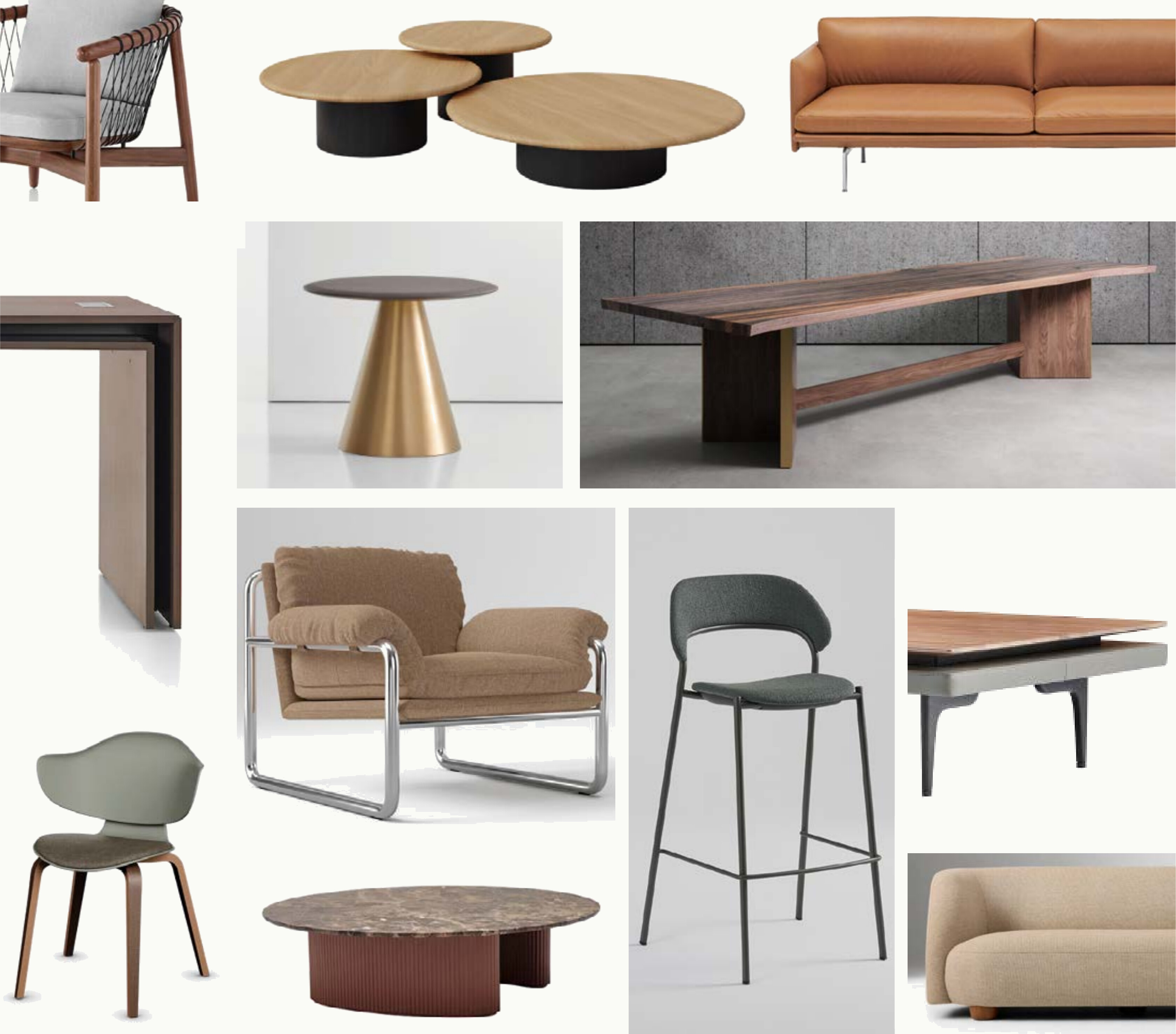
The furniture strategy balances practical, durable pieces with a hospitality driven sensibility at arrival, creating an immediate sense of welcome while supporting a range of postures. More agile, reconfigurable elements are concentrated under and adjacent to the stair, activating this zone as a flexible setting for interaction, collaboration, and informal project display.
The proximity to Madison, Wisconsin brings a strong culture of design thinking, university influence, and a growing community of makers. This context lends itself to an aesthetic grounded in Midwestern material honesty — favoring oak, ash, and walnut, with an emphasis on durability, restraint, and quiet refinement. Within this framework, there is an opportunity to collaborate with regional craftspeople and small scale fabricators across the Madison area, introducing bespoke elements such as a communal table or feature millwork that reflect local skill and sensibility. The result is a workplace that feels both architecturally intentional and regionally rooted, reflecting the area's culture of design thinking, craftsmanship, and purposeful simplicity. Natural materials, thoughtful detailing, and enduring forms create an environment that is warm, welcoming, and built to last.